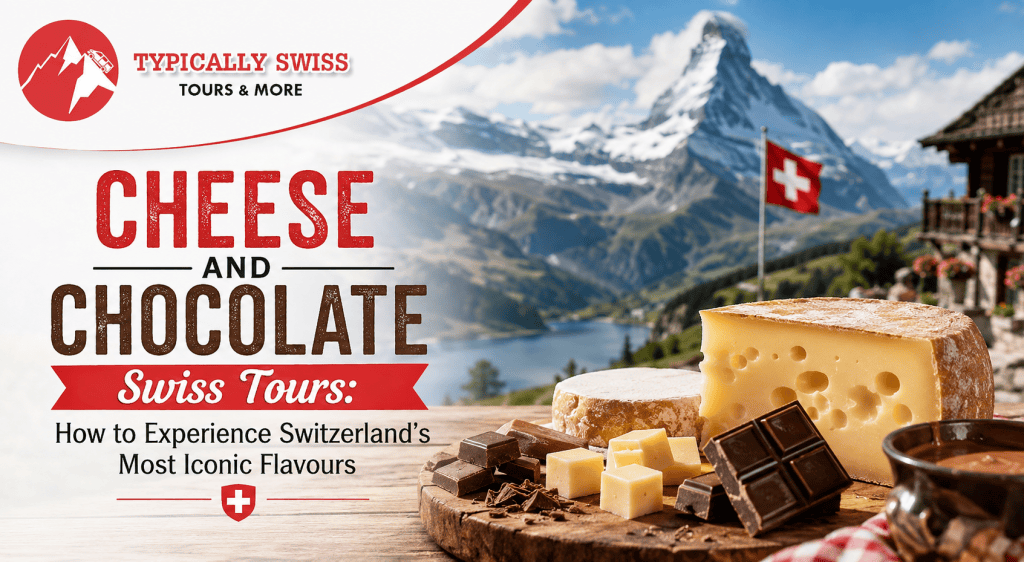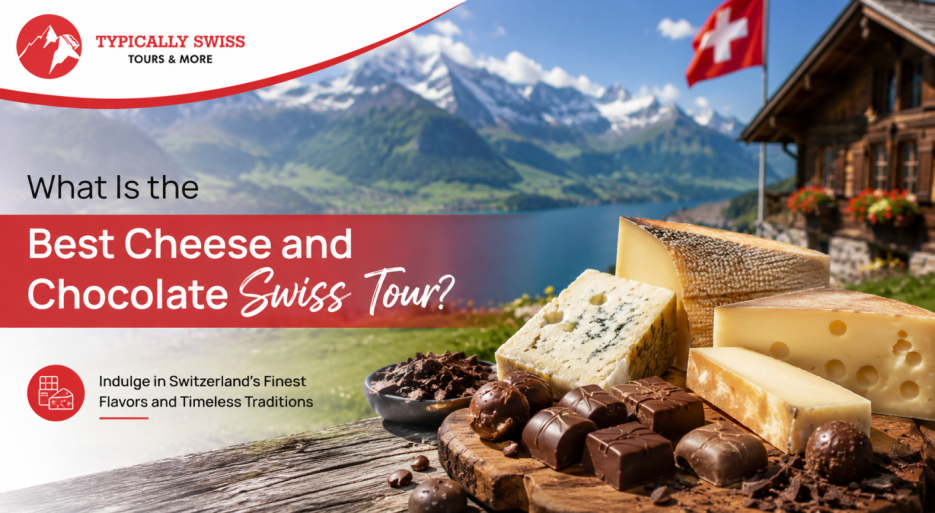
Switzerland is famous for dramatic Alpine scenery, clear lakes, charming villages, and efficient rail journeys. Yet for many travelers, some of the most memorable Swiss experiences begin at the table. The aroma of melted cheese in a mountain village, the taste of freshly made chocolate, and a visit to a traditional dairy can reveal a side of Switzerland that photographs alone cannot capture.
For travelers from the United States, a cheese and chocolate focused Swiss itinerary offers an especially enjoyable way to explore the country. Instead of treating food as something to enjoy between sightseeing stops, you can make it part of the journey itself.
A well-planned Swiss food tour can connect Alpine landscapes with local traditions, historic towns, artisan producers, and regional specialties. Gruyère, Emmental, raclette, fondue, Swiss milk chocolate, and other specialties each tell a different story about the country’s geography and culture.
This guide explains how to experience Switzerland’s iconic cheese and chocolate traditions, which destinations are especially worthwhile, how to organize your itinerary, and what first-time visitors should know before planning a culinary trip.
Why Cheese and Chocolate Belong on a Swiss Itinerary
Cheese and chocolate are not simply souvenirs associated with Switzerland. They are closely connected to the country’s agricultural traditions, regional identities, and culinary history.
Swiss cuisine has developed under German, French, and northern Italian influences, while geography and regional farming traditions have created considerable variation from one part of the country to another. Switzerland has hundreds of cheese varieties, and traditional specialties such as fondue and raclette are enjoyed across the country.
Chocolate has an equally important place in Swiss culinary culture. Nineteenth-century Swiss pioneers helped shape modern chocolate making, including the development of milk chocolate and advances in conching. Swiss chocolate subsequently became internationally recognized for its quality and craftsmanship.
That history makes a culinary-focused trip much more interesting than simply visiting a shop and buying a box of chocolates.
You can see where ingredients come from, learn how traditional products are made, taste regional variations, and understand why particular foods became associated with particular areas.
What Makes Swiss Cheese So Special?
Swiss cheese is far more diverse than the familiar image of cheese with holes.
Different regions produce distinctive varieties with different textures, aromas, aging periods, and flavors. Official Swiss tourism information highlights varieties including Gruyère, Emmental, Appenzeller, Sbrinz, Vacherin, and Tête de Moine.
Milk is central to this tradition. Switzerland’s Alpine landscapes and farming communities have supported cheesemaking for centuries, with local production methods evolving according to regional conditions.
For visitors, this means that tasting cheese in Switzerland can become a regional experience.
A cheese tasting in the French-speaking part of Switzerland may introduce you to Gruyère and Vacherin. Traveling toward the Emmental region brings another perspective, while eastern Switzerland is associated with varieties such as Appenzeller.
The experience becomes even more memorable when you visit a dairy or Alpine cheesemaking facility rather than simply ordering cheese at a restaurant.
Discover Gruyère in the Fribourg Region
If cheese is one of the main reasons for your trip, the Gruyère region deserves a prominent place on your itinerary.
The medieval town of Gruyères sits among green hills and Alpine landscapes in the Fribourg region. The area is closely associated with Le Gruyère AOP, one of Switzerland’s best-known cheeses.
At La Maison du Gruyère in Pringy, visitors can learn about the cheesemaking process and see how the famous cheese is produced using Alpine milk. Switzerland Tourism also highlights tasting opportunities involving different stages of ripeness.
The surrounding destination makes the experience particularly appealing. You are not simply visiting a food attraction. You can combine the dairy visit with time in Gruyères, explore the historic village, and enjoy the surrounding countryside.
This is one of the best examples of how food can become part of a broader Swiss travel experience.
Try Traditional Swiss Fondue
A cheese-focused Switzerland vacation would feel incomplete without trying fondue.
Traditional Swiss fondue is made with melted cheese and served with pieces of bread. It is traditionally presented in a caquelon, a ceramic fondue pot, and eaten communally.
The setting can make as much difference as the dish itself.
A mountain restaurant after a day outdoors offers a very different atmosphere from a modern restaurant in a city center. Both can provide a worthwhile culinary experience, but travelers interested in Swiss traditions may particularly enjoy experiencing fondue in an Alpine or traditionally styled setting.
Fondue also works well during cooler months, although visitors can find Swiss cheese specialties throughout the year.
Don’t Miss Raclette
Raclette is another essential Swiss cheese experience.
The dish centers on melted raclette cheese, traditionally served with potatoes and accompanied by items such as pickles and onions.
Its appeal lies in its simplicity. The cheese remains the star, while the accompanying ingredients provide texture and contrast.
For travelers who enjoy experiencing local food rather than rushing through a checklist of attractions, a relaxed raclette meal can be an ideal evening activity.
Ask your guide or local host about regional preparations. Swiss food traditions often vary by location, and discovering those differences is part of the fun.
Explore Emmental and Its Famous Cheese
The Emmental region in the Bern area is associated with the internationally recognized Emmental cheese, known for its characteristic holes.
A visit to an Emmental cheese dairy can add another dimension to a Switzerland itinerary because you can connect the product with the landscape where the tradition developed.
The countryside is also worth experiencing independently of the food. Rolling green hills, farms, villages, and Alpine views create the kind of scenery many visitors imagine when picturing rural Switzerland.
This is a good reminder that culinary travel does not need to mean spending the entire day indoors. Some of the best food experiences are connected directly to the landscapes and communities that produce the food.
Why Swiss Chocolate Has Such a Strong Reputation
Swiss chocolate has a long and influential history.
Chocolate reached Europe centuries ago, but Swiss chocolatiers made important contributions during the nineteenth century. Daniel Peter is associated with the development of milk chocolate, while Rodolphe Lindt is known for advances in conching that helped create a smoother chocolate texture.
The Swiss chocolate industry remains significant today. According to Switzerland’s official information portal, the country’s 17 leading chocolate producers manufactured more than 209,000 tonnes of chocolate in 2024, with 72% sold abroad.
For visitors, the significance is not really about production numbers. It is about experiencing the craftsmanship and history behind a product that has become part of Switzerland’s international identity.
Visit Maison Cailler in Broc
One of the most recognizable chocolate experiences in Switzerland is Maison Cailler in Broc.
The facility traces its history to François-Louis Cailler, who began making chocolate in 1819. Today, visitors can explore the history of the brand, learn about chocolate production, and sample different varieties.
Its location also makes it particularly convenient for travelers interested in combining cheese and chocolate.
Broc is close to the Gruyère region, meaning a carefully planned day can connect two of Switzerland’s most famous culinary traditions without turning the itinerary into a series of unrelated food stops.
This combination is one of the reasons the Fribourg region works so well for a Swiss cheese and chocolate tour.
Combine Cheese and Chocolate in One Day
One of the most efficient culinary experiences in Switzerland is to combine a cheese-focused stop with a chocolate-focused attraction in the same region.
The Gruyère area is particularly suited to this approach. You can begin with a visit to La Maison du Gruyère, continue to the historic town of Gruyères, and then travel onward toward Broc for a chocolate experience at Maison Cailler.
Switzerland Tourism itself highlights the close connection between La Gruyère’s cheese and chocolate attractions.
Another well-known option is the Chocolate Train experience from Montreux, which connects Montreux with La Maison du Gruyère, Gruyères, and Maison Cailler. Its operating schedule varies by season, so travelers should check the current timetable before planning around it.
For travelers visiting from the United States, this type of route can be particularly useful because it allows several distinctive experiences to fit naturally into one travel day.
How to Build a Cheese and Chocolate Swiss Tour
A good culinary itinerary should not feel like a race between attractions.
Start by choosing the regions you most want to experience. If cheese and chocolate are priorities, the Fribourg and Gruyère area is an obvious starting point. You can then connect it with larger destinations such as Geneva, Montreux, Bern, Lucerne, or Zurich depending on the rest of your trip.
A practical itinerary might look like this:
Days 1 to 2: Geneva or Montreux
Begin in the Lake Geneva region and allow yourself time to adjust after your flight from the United States.
Montreux can be particularly convenient if you want to explore the Lavaux area, Lake Geneva, and the culinary attractions farther inland.
Days 3 to 4: Gruyère and Broc
Travel into the Gruyère region for a more food-focused portion of the trip.
Visit a cheese dairy, explore Gruyères, enjoy a traditional cheese meal, and dedicate time to a chocolate experience in Broc.
Days 5 to 6: Bern and Emmental
Continue toward Bern and consider exploring the surrounding countryside.
An Emmental-focused experience can add another perspective on Swiss cheesemaking while giving you a chance to experience rural landscapes.
Days 7 and beyond: Central Switzerland or Zurich
Continue toward destinations such as Lucerne or Zurich depending on your overall itinerary.
You can still include chocolate shops, local restaurants, markets, and regional food experiences without making the entire trip exclusively culinary.
The exact number of days should depend on your interests and travel pace. A shorter trip can focus on one region, while a longer Switzerland vacation gives you more opportunity to explore regional food traditions.
How to Experience Swiss Cheese and Chocolate Like a Local
The best culinary memories often come from slowing down.
Instead of visiting several shops simply to collect souvenirs, spend time learning about the food. Ask questions about where the ingredients come from, how cheese is aged, what makes one variety different from another, or how a particular chocolate is produced.
Markets can also be rewarding. Switzerland Tourism notes that farmers’ markets and cheese sellers can provide access to regional specialties, including cheeses connected with Alpine production.
Restaurants are another important part of the experience.
Try traditional dishes such as fondue, raclette, rösti, or Älplermagronen rather than limiting your culinary exploration to cheese and chocolate alone. Swiss cuisine is much broader than its two most famous exports.
What Should Americans Know Before a Swiss Food Tour?
Travelers arriving from the United States should think about Switzerland’s geography when planning food experiences.
Two destinations may look close on a map but require meaningful travel time because of mountain routes, connections, and regional transportation.
Public transportation can make culinary travel easier because Switzerland has an extensive rail network connecting major cities and many smaller destinations. Still, attractions such as dairies and rural producers may have specific opening hours or require advance planning.
Check official attraction schedules before committing to a particular day. Seasonal experiences can operate on different timetables, and popular attractions may become busy during peak travel periods.
If you are planning a private or customized itinerary, working with an experienced tour provider can also simplify the logistics.
Typically Swiss Tours can be a useful starting point for travelers looking to build a Switzerland itinerary around their interests. You can explore the company’s Switzerland travel services at Typically Swiss Tours and consider how culinary experiences can fit alongside the country’s scenic and cultural highlights.
How Much Time Should You Spend on a Cheese and Chocolate Experience?
There is no single ideal duration.
A focused half-day can be enough for a dairy or chocolate attraction, particularly if your itinerary is already full.
A full day is better if you want to combine a cheese dairy, village sightseeing, a relaxed meal, and a chocolate experience without constantly checking the clock.
For travelers who genuinely enjoy food, dedicating two or more days to a culinary region can be even more rewarding.
The important factor is balance. Switzerland offers spectacular mountains, lakes, historic towns, museums, and scenic rail journeys. Cheese and chocolate should enrich your trip rather than prevent you from experiencing everything else the country offers.
What Should You Bring Home From Switzerland?
Chocolate is an easy souvenir because it is widely available and comes in many formats.
Cheese can also make a memorable gift, but travelers should think about transportation and food import rules before purchasing dairy products to take home to the United States.
For international travelers, it is sensible to check the current U.S. Customs and Border Protection requirements before packing animal-derived food products.
Chocolate and confectionery are generally easier to transport, but packaging, heat, and luggage conditions can still affect the quality of delicate products.
A practical approach is to purchase food souvenirs toward the end of your trip and keep them properly packaged during your journey.
Why a Culinary Tour Can Make Switzerland More Memorable
Food creates a connection between a traveler and a destination that sightseeing alone sometimes cannot provide.
A photograph of Gruyères can remind you of a beautiful medieval village. Tasting Gruyère cheese in the same region, learning how it is produced, and then enjoying a traditional meal there creates a much stronger memory.
The same applies to chocolate.
Learning about Swiss chocolate production before tasting it gives the experience context. Instead of simply thinking about chocolate as a sweet treat, you begin to understand the history, craftsmanship, ingredients, and cultural identity behind it.
That is the real value of a cheese and chocolate Swiss tour.
It transforms familiar foods into part of a story about Switzerland.
Frequently Asked Questions About Cheese and Chocolate Swiss Tours
What is the best region in Switzerland for cheese and chocolate?
The Gruyère and Broc area in the Fribourg region is one of the most convenient choices because travelers can experience both Swiss cheesemaking and chocolate production within the same broader region. La Maison du Gruyère and Maison Cailler are two notable attractions in the area.
Can you visit a Swiss cheese factory and chocolate factory on the same day?
Yes. The Gruyère region makes this particularly practical. A well-planned itinerary can include La Maison du Gruyère, time in Gruyères, and Maison Cailler in Broc on the same day, although travel time and attraction opening hours should be checked in advance.
What are the most famous Swiss cheeses to try?
Gruyère, Emmental, Appenzeller, Sbrinz, Vacherin, and Tête de Moine are among the Swiss varieties travelers may encounter. Swiss cheese production is highly diverse, so trying regional varieties can be more rewarding than limiting yourself to the most internationally recognized names.
What Swiss chocolate should first-time visitors try?
There is no single chocolate that everyone should choose. A better approach is to sample several styles and notice differences in milk chocolate, dark chocolate, fillings, textures, and regional specialties. Visiting a chocolate attraction such as Maison Cailler can provide an introduction to Swiss chocolate history and production.
Is Swiss fondue available throughout Switzerland?
Fondue is widely recognized as a Swiss classic and can be found in many parts of the country. However, regional traditions and restaurant preparations can vary. Switzerland Tourism identifies fondue as one of the country’s classic dishes.
Is a cheese and chocolate tour suitable for a Switzerland family vacation?
Yes. Food attractions can add variety to a family itinerary, especially when combined with village visits, scenic travel, and interactive experiences. The right schedule depends on the ages and interests of the travelers.
When is the best time to take a Swiss cheese and chocolate tour?
Cheese and chocolate experiences can be enjoyed throughout the year. Your ideal season depends more on the rest of your itinerary. Winter can create a cozy atmosphere for fondue and raclette, while warmer months are useful for combining food experiences with hiking, village walks, and outdoor sightseeing.
How can I plan a Switzerland trip around food?
Start with the culinary experiences you most want to visit, then build your transportation and sightseeing route around them. Consider regional attractions such as Gruyères, La Maison du Gruyère, Broc, and chocolate experiences, while leaving enough time for major Swiss destinations and scenic travel.
Plan Your Swiss Culinary Journey
Switzerland’s cheese and chocolate traditions offer much more than delicious food. They provide a way to explore Alpine agriculture, regional culture, historic villages, craftsmanship, and the landscapes that have shaped Swiss life for generations.
From tasting Gruyère near its home region to discovering the history of Swiss chocolate in Broc, a culinary itinerary can turn an ordinary sightseeing trip into a more personal and memorable journey.
If you are planning a Switzerland vacation from the United States and want to combine iconic scenery with authentic food experiences, explore the possibilities with Typically Swiss Tours and start shaping a Swiss journey around the flavours you want to remember.